

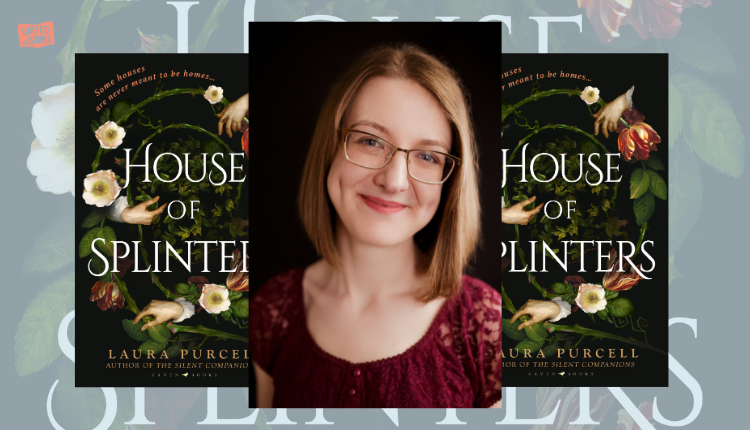
Laura Purcell returns to The Bridge with the haunting House of Splinters
Laura Purcell talks House of Splinters, her haunting return to the world of The Silent Companions, from ghostly secrets to Gothic atmosphere.

Laura Purcell is back with another chilling Gothic tale, revisiting the eerie estate that first captivated readers in The Silent Companions. In House of Splinters, she returns to The Bridge to unearth its dark history, weaving a story of hauntings, family secrets, and childhood fears. We spoke with Laura about revisiting her most iconic setting, crafting that distinctive sense of unease, and why the uncanny always finds its way into her fiction.
Why did you decide to revisit the world of The Silent Companions? What was it like returning to The Bridge after all this time?
My readers have been asking me for more silent companions since 2017, but I wasn’t keen to write a sequel. I liked where I’d left the story, and particularly the ambiguity around my character Elsie. However, on re-reading the novel, I realised there was lots of potential in the history of the house. Several ghoulish incidents from the past are mentioned in The Silent Companions and I decided to craft a book around them.
It was enormous fun to be back at The Bridge, a weird homecoming. Fortunately I’d saved all my notes and the floorplan from my initial drafting. The main challenges were making sure all the details married up and finding different ways to describe rooms I’d already written about.
For readers who haven’t picked up The Silent Companions yet, would you recommend they read it before House of Splinters, or can this novel stand alone?
House of Splinters explains and refreshes everything you need to know from The Silent Companions, so it can absolutely stand alone. But personally, I think you will get a lot more out of the novel if you have read The Silent Companions first, you will be able to spot the references to the first book and, more importantly, you will be able to avoid spoilers for that story.
The silent companions themselves are such an unsettling presence. What originally inspired them, and why do you think they’re so effective at creating that haunting atmosphere?
The wooden dummy boards or silent companions are real antiques found in many stately homes, and they perfectly encapsulate the concept of ‘the uncanny’. They are somewhat humanoid but not quite right, an effect that’s heightened by their proportions and archaic painting style. They blend the feeling of a creepy statue with an eerie portrait. Moreover, there’s so much debate about what they were actually used for that it makes it feel like they’ve sprung up from nowhere, uninvited, for their own secret purpose.
Family secrets in the novel are revealed gradually—through letters, diaries, and anecdotes. How did you decide on the pace and form of these revelations to keep readers both unsettled and engaged?
Correspondence and diaries are staples of classic Gothic literature, words from beyond the grave, so I wanted to make sure they played a key part in my narrative. The trick was to make sure that no one person held all the answers, so the secrets could be teased out slowly. You need to keep enough mystery that the reader wants to keep turning the pages, but at the same time drop answers as you go along, so the reader is rewarded and knows there will eventually be a big payoff.
Gothic horror thrives on atmosphere, e.g., houses, gardens, weather, and the slow decay of the world around the characters. Which atmospheric details did you most enjoy writing in this book?
For the first time (I think?) I was able to play around with warm, oppressive weather rather than the usual rain, fog and snow. I had great fun with the juxtaposition of a budding spring full of butterflies with the dark horrors unfolding at The Bridge. I was able to get my characters out and about a bit more in this book, exploring the common and the village, adding more flesh to the bones of my haunted estate.
Children in the story seem to have a particularly eerie connection to the house. Why did you choose to explore that link, and what does it add to the tension of the novel?
At their heart, both novels are about childhood and generational trauma. The troubles at The Bridge all started with one woman’s wish for a daughter, and the difficulties that daughter faced in an unjust society. There is something childlike and spiteful to the hauntings that take place, a regression to much younger feelings, which causes the characters to face their own pasts. In House of Splinters, seeing the events unfold around young Freddy gives us an innocent to fear for and hope that things will turn out differently for him.
Finally, do you see yourself revisiting the world of your other books?
At present, I don’t think any of my other books have the popularity to warrant a return, but there are many characters I’d love to revisit. I wonder what Dorothea from The Corset is up to now, imagine Jenny and Oscar from The Whispering Muse running their music hall, and hope the wolves haven’t found Lucy and Camille from Moonstone yet.
House of Splinters by Laura Purcell is published by Raven Books on 9th October 2025
