

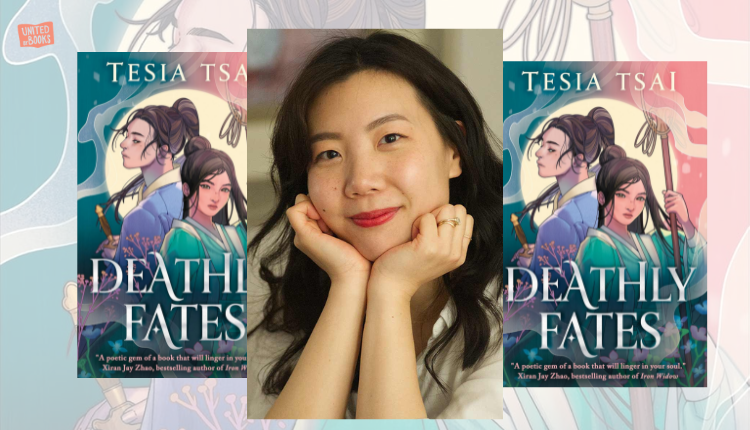
‘Deathly Fates’ author Tesia Tsai on Chinese folklore and writing beyond death
The novel blends atmospheric horror with emotional depth, exploring love that endures beyond the grave.

What first sparked the idea for Deathly Fates?
Jiangshi (aka hopping vampire) films from when I was a kid! As I was brainstorming ideas for what I wanted to write about, I remembered those movies my mom used to watch, and how creepy and campy they were. I thought, I’ve never read a book about that before, so I dove into a rabbit hole of research. Soon, I came across the original folklore those films were based on, and I became fascinated by the practice of corpse-driving and the familial themes inherently tied to it.
The book draws on Chinese folklore, including jiangshi and the underworld. What made you want to explore these elements in particular?
Family is at the top of my list of values, and I really resonated with that part of the folklore. In my culture, the passing of a loved one is a solemn event, but it’s also an opportunity for family to gather together and reflect on their connection to those who came before. I think often about where I come from and the legacy I hope to leave behind, so Deathly Fates’s focus on love beyond death felt natural to write about.
You weave Chinese phrases into the story in a really natural way. How did you decide when to include them, and what do they add to the atmosphere?
I mostly used Chinese phrases for nouns that are distinct to the culture, like “jiangshi.” But I also liked to use them for terms of endearment or familiar titles, such as “jie,” to express the intimacy between characters. Including these phrases allows readers to more easily immerse themselves in the setting, and hopefully, it also sparks connection with readers of similar backgrounds!
What kind of research went into building the world of Deathly Fates?
I did most of my research online, looking at popular and scholarly sources about corpse-driving, jiangshi, and Taoist beliefs. To get a better understanding of the setting, I also visited traditional temples and old streets in Taiwan.
Writing within real cultural traditions can be both exciting and challenging. How did you balance authenticity with creative freedom?
I wanted to be respectful to the culture I was writing about, which is why the evil spirits in Deathly Fates are so human, even sympathetic. Chinese horror isn’t like Western horror, where the tension comes from jump scares and gore. While I wanted my scenes to evoke the fear and anxiety expected by Western audiences, I also wanted to be true to the perspective of death as a sacred, emotional concept.
The underworld setting feels vivid and immersive. What was the most fun part of bringing it to life?
I had a morbidly fun time diving into the ghosts’ respective brews of resentment, revenge, and malice. Leaning heavily into the elements that creep me out personally, I got to experience being behind the curtain, controlling what details to give my readers while feeling safe knowing that those details were my own creation.
YA fantasy is seeing more global mythologies come into the spotlight. What do you think Chinese folklore brings to the genre that feels especially fresh?
I may be biased, but I think Chinese folklore adds not only new mythologies to dip into, but new methods of storytelling as well. Chinese stories tend to start slowly, like the soft strokes of a watercolor painting. Conflict is often more internal than external, requiring characters to grow over a span of years, sometimes even centuries. In a world where instant gratification is the norm, and often exhaustingly so, I think Chinese-inspired tales offer readers a chance to slow down and savor the small things.
Finally, if readers finish the book wanting more, what’s one myth, story, or cultural detail you’d love them to look up next?
If readers enjoy Deathly Fates, I highly recommend they check out the jiangshi films I mentioned above. They’re usually horror-comedy, so not too scary, and it’d be awesome to see those movies revived (pun intended!) in pop culture.
